Friday, July 4, 2003

Interview: Bjorn "Speed" Strid of Soilwork


When two bands are constantly compared to each other in the media, why not take the show out on the road and prove to the fans which one is actually the best?

That's just what Swedish acts Soilwork and In Flames decided to do with the In Flames vs. Soilwork tour, which is currently winding its way through the U.S.

The two bands have also fanned the flames of their rivalry with their dueling videos, which debuted on MTV2's "Headbanger's Ball" a few weeks ago. The Soilwork video for "Rejection Role" and the In Flames video for "Trigger" feature members of each band heckling the other as they perform. There are also cutaway scenes which show some street meetings and a water balloon fight between the bands.

"They're pretty funny and different from most metal videos," said Soilwork vocalist Bjorn "Speed" Strid. "We're always getting compared to each other in reviews and so on, so I think it's a pretty cool thing that we're acting like rivals in the videos."

In fact, the bands are friends. The idea for the videos was born when the members of In Flames came to visit Soilwork in the studio. They were both planning videos with the same director, who pitched the idea. Strid said both bands thought it would be fun.

"Metal videos are always supposed to be five angry guys standing in a warehouse with chains hanging all over the place, so we're kind of making fun of the whole thing," he said.

The two bands are also following a similar path with their recent albums and venturing into a new, more melodic brand of metal. So far, Soilwork's "Figure Number Five," has received positive reviews. Strid says the changes aren't intentional, it's just the natural direction the band's writing has taken in recent years.

"The main elements in Soilwork's music are melody, atmosphere and intensity, and I think we've got a perfect balance between those elements on this album," Strid says.

"Figure Number Five" also finds Strid again stretching his vocal abilities from the typical screams that were one of the hallmarks of the "Gothenburg sound" to more melodic, clean vocals.

"I've rehearsed a lot on my vocals, sometimes six hours a day singing to a lot of different kinds of music," Strid said. "Just like the other guys in the band, I want to develop as a musician."

But, as always in the metal world, with a more melodic sound comes a certain number of unhappy fans. Strid thinks most of the fans will come around in the same way they did for the band's last album "Natural Born Chaos," which was panned by metal fans and critics at first, but later ended up on most 2002 year-end "best of" lists.

"We get some angry e-mails about `sellout,' but it's always like that," he said. "I think most of the Soilwork fans are growing with the sound, and I think most of the people who liked `Natural Born Chaos' will like this one as well."

Once the In Flames vs. Soilwork tour is done, the band still has plenty to do. Strid said they'll be heading to Germany, Japan and Australia, before they land back in the states for a second U.S. tour. Strid said it's all about getting their music in front of the fans.

"It's going to be hectic," he said. "But it's great."

Friday, June 27, 2003

Tribute: Ozzy Osbourne


For those who only know Ozzy as the doddering, slightly addled father on MTV's "The Osbournes," it may be hard to figure out why legions of hardcore fans are so dedicated to him, why stadiums erupt in chants of "Ozzy, Ozzy" when he takes the stage or why almost every hard rock outfit worth its salt claims him as an influence.

To understand that, you'd have to go back and look at the life and times of the godfather of metal.

The story began in 1970, when a new band and new sound were about to be unleashed on the world. Black Sabbath's self-titled debut album hit record store shelves. The four young men from Birmingham, England, began as a blues band called Earth, but then hit on a brand of music that distilled their industrial roots into pure musical energy.

Though some might argue that heavy metal began with Led Zeppelin, Steppenwolf, Jimi Hendrix or even the Beatles' "Helter Skelter," when you hear the first three haunting, hollow notes of the song "Black Sabbath" - notes that echo like the tolling of a lone bell over a bleak landscape - you know instantly this is a different beast entirely.

The band was built around the crushing guitar riffs of Tony Iommi. Though not the most technically proficient guitarist, Iommi reigns as undisputed master of the riff. Three decades later, he still owns the copyright on most of the best metal riffs ever written.

Giving the band its personality was a slightly overweight, blond singer named John "Ozzy" Osbourne. His vocals weren't as impressive and versatile as his peer Robert Plant, nor were they as powerful as later metal vocalists like Bruce Dickinson, Rob Halford and Ronnie James Dio, who later replaced him in Sabbath. But they were unique, and his mocking voice fit seamlessly into the band's gloomy sound.

Thus began a 10-year run that would shake the music world to its core, giving rise to bands like Metallica, Slayer and Pantera. The influence of Sabbath even echoes in the percussive rhythms of today's hard rock.

But like all good things, Sabbath eventually came to an end (at least for Ozzy.) In a drug-addled confusion at the end of the 1970s, Ozzy and Sabbath parted ways. At the age of 30, most people wrote Ozzy off as a washed-up has-been. They were wrong.

Enter Sharon Arden, daughter of Ozzy's manager, who worked tirelessly to get him signed to a solo deal before becoming Mrs. Osbourne. A shrewd businesswoman, most people speculate that Sharon is the only reason Ozzy has lived to see 54, and certainly the main reason for the singer's success.

In 1980, Ozzy released his solo debut, "Blizzard of Ozz," which would become one of the seminal recordings in heavy metal history and spawn classic songs like "Crazy Train" and "Mr. Crowley." He went on to surpass his former bandmates in Black Sabbath, becoming the epitome of metal, while they faded into obscurity as a revolving door for musicians.

One of the primary reasons for Ozzy's success is the bands that he has built around him over the years. One thing fans count on from Ozzy is great guitar.

He found a soulmate in the early 1980s in Randy Rhoads, a virtuoso guitarist whose untimely death in a 1982 plane crash robbed the world of a promising talent. Rhoads' two albums with the Ozzman, "Blizzard of Ozz" and "Diary of a Madman" remain fan favorites and classics of the genre.

Though Rhoads' death hit Ozzy hard, he soldiered on, lining up flashy guitarist Jake E. Lee for his next two albums, "Bark at the Moon" and "The Ultimate Sin." While Ozzy and Lee produced some great songs, they failed to capture the same magic as the Rhoads albums.

But in 1989, Ozzy found another guitarist to fill the void, a fresh-faced kid named Zakk Wylde. The new guitar hotshot had his own unmistakable style, blending lightning fast licks with ear-piercing harmonic shrieks. His first album with Ozzy, "No Rest for the Wicked," was the fastest and heaviest of Ozzy's solo career, a sharp contrast to the more commercial "Ultimate Sin."

Nearly 15 years later, Wylde isn't so fresh-faced anymore (in fact, he's pretty grungy-looking), but he's still Ozzy's right-hand man. He's been partially responsible for some of Ozzy's greatest musical triumphs, including the critically-acclaimed 1992 release "No More Tears" and the highly underrated 2001 release "Down to Earth."

But there have been a few potholes in the road to success for Ozzy - his arrest for urinating on the Alamo in a drunken stupor, his attempt to choke Sharon in a drug-induced rage, a lawsuit brought by parents who claimed his anti-alcoholism anthem "Suicide Solution" caused their children to kill themselves and, of course, the legendary bat-biting incident.

"No matter what achievements I make in my career, I will always be known as the guy who bit the bat's head off," Ozzy said in a 2001 interview with the Associated Press. "Even the Rock and Roll Hall of Fame considers my career a joke because of it."

Indeed, that could have something to do with the reason Black Sabbath has been passed over for induction time and time again, despite the obvious influence they've had on music. But it's not the Hall of Fame that Ozzy cares about, it's the oceans of chanting fans that pack venues wherever he plays - the fans that have allowed him a 30-plus year career. He's never deserted them, and they've never deserted him.

Evidence of that can be found recently, when his insurance company refused to cover a June 11 show in Toronto, because of the SARS scare. Ozzy played the date anyway.

"I'm not afraid of SARS," he said in an interview with Much Music. "I have a commitment and somebody needs to be there for the fans in Toronto."

Despite the ups and downs of his career, and even a temporary retirement in 1992, Ozzy has made one of his biggest contributions to rock `n' roll in the late 1990s with the launching of his annual Ozzfest tour in 1996. The shows, which pair established, big-name hard rock and metal bands with some of the top up-and-coming groups, have been among the top grossing summer tours every year. Now in its eighth year, Ozzfest has helped launch the careers of some of today's biggest hard rock acts, including System of a Down, Static-X, Powerman 5000 and Disturbed.

Ozzfest also gave the world the moment metal fans had been waiting 20 years for in 1999 and 2001, when the reformed original lineup of Black Sabbath headlined the tour.

All of these things and more have combined to give Ozzy one of the largest, most dedicated followings of any rock band on the planet. But there's an easier way to explain it. Just ask any fan, and they'll give you a much simpler answer - "Ozzy (bleeping) rules." Indeed, he (bleeping) does.

Tuesday, June 17, 2003

Review: Blind Guardian, "Live"

If you're a fan of Blind Guardian, this two-CD collection of some of the best songs from the band's seven studio albums is a must-have. If you're not a fan, this collection of tunes fueled by fantasy and legend is a fantastic introduction.

The album, recorded at venues all over Europe and Asia, show that the rest of the world knows what the American metal community is just starting to pick up on - that Blind Guardian is one of the most original and distinctive bands out there.

"Live" provides a quick overview of the band's progression from a fairly straightforward power metal outfit on songs like "Majesty" and "Valhalla" to the symphonic powerhouse they've become on numbers like "Nightfall" and "The Soulforged."

The focus on the album, is on the later, more complex works. They play six of the nine songs on "Imaginations From the Other Side" and five tunes from "Nightfall in Middle-Earth."

The album provides more than two hours of Blind Guardian in fine form, making the smooth transition from blistering power metal to minstrel songs. It's the latter that often get the bigger reaction from the crowd.

Numbers like "The Bard's Song (In the Forest)" get the crowd clapping along, and the audience is singing louder than vocalist Hansi Kursch on "Lord of the Rings." (I still think Peter Jackson missed a great opportunity by not getting this song somewhere in the film trilogy; it's a perfect fit.)

The performances are solid, the fan reaction is fantastic and it's two solid hours of Blind Guardian. What more could you ask for?

Get "Live."

Friday, June 13, 2003

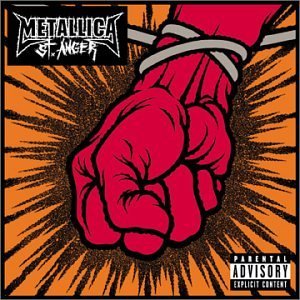
Review: Metallica, "St. Anger"

June 5, 2003.

It's a day that I thought I'd never see - the day Metallica released another album I liked.

Like many other Metallica fans that discovered the band in their thrashing early days, I had given up hope after more than a decade of overproduced, radio-friendly rock tunes. But with "St. Anger," their first album of original material since 1997, Metallica returns to the top of their game.

Is it a return to their thrash roots? Not exactly. If you take tapes of everything Metallica has ever recorded since their 1983 debut "Kill `Em All," chop them up and splice the pieces back together at random, what you'd end up with might sound something like "St. Anger." There are elements that would have been right at home on their classic "Master of Puppets" album, and others that sound like they came off the band's mid-1990s albums "Load" and "Re-Load" - quite often within the same song.

The result is utter chaos - but it's a good kind of chaos. It put me in mind of the first time I heard "Kill `Em All." The execution of the songs was a little rough, but the energy coming off the album was incredible. It's been a long time since Metallica has captured that feeling.

From the machine-gun riffing of the opening track "Frantic," to the Southern-rock-on-steroids shuffle of "Sweet Amber," there's something on this album that every Metallica fan, old or new, can appreciate.

In the days after its release, fan opinion on Web forums dedicated to the band has been sharply split. Some of the criticisms are legitimate. The production is pretty rough, and I would have liked to hear Kirk Hammett lay down a couple of monster guitar solos. But the raw energy on this album more than makes up for those problems.

There are a couple of snoozers, like the vanilla "Unnamed Feeling" and "Invisible Kid," which wears out its welcome long before its 8 plus-minute runtime is over. On the other hand, songs like the album closer "All Within My Hands," the thrashing title track and the groove of "Shoot Me Again" easily justify their 7-plus minutes with wild tempo shifts, insane bursts of speed and soft, melodic interludes.

Metallica is also one of the first bands to hit on the real way to combat song-trading online - by adding value. For the price of the "St. Anger" CD, you also get a DVD of the band rehearsing all 11 songs live (with new bassist Rob Trujillo's talents added on the DVD, some of the rehearsal versions sound better than the songs on the album) and a code that gives you access to the Metallica Vault Web site, where you can download live performances. The site will be updated regularly with new stuff. The result is a package that makes me feel like I got my money's worth.

Of course, no matter what special features the package has, the real treat is the return of Metallica. It's not the same Metallica I remember from my youth, but a new Metallica with the potential to be even better.

In the end, "St. Anger" is a big middle finger to people like myself who have accused Metallica of going soft over the past decade - and I, for one, love it.

Thursday, June 5, 2003

Review: Metallica, "St. Anger"

It's a day that I thought I'd never see - the day Metallica released another album I liked.

Like many other Metallica fans that discovered the band in their thrashing early days, I had given up hope after more than a decade of overproduced, radio-friendly rock tunes. But with "St. Anger," their first album of original material since 1997, Metallica returns to the top of their game.

Is it a return to their thrash roots? Not exactly. If you take tapes of everything Metallica has ever recorded since their 1983 debut "Kill 'Em All," chop them up and splice the pieces back together at random, what you'd end up with might sound something like "St. Anger." There are elements that would have been right at home on their classic "Master of Puppets" album, and others that sound like they came off the band's mid-1990s albums "Load" and "Re-Load" - quite often within the same song.

The result is utter chaos - but it's a good kind of chaos. It put me in mind of the first time I heard "Kill 'Em All." The execution of the songs was a little rough, but the energy coming off the album was incredible. It's been a long time since Metallica has captured that feeling.

From the machine-gun riffing of the opening track "Frantic," to the Southern-rock-on-steroids shuffle of "Sweet Amber," there's something on this album that every Metallica fan, old or new, can appreciate.

In the days after its release, fan opinion on Web forums dedicated to the band has been sharply split. Some of the criticisms are legitimate. The production is pretty rough, and I would have liked to hear Kirk Hammett lay down a couple of monster guitar solos. But the raw energy on this album more than makes up for those problems.

There are a couple of snoozers, like the vanilla "Unnamed Feeling" and "Invisible Kid," which wears out its welcome long before its 8 1/2-minute runtime is over. On the other hand, songs like the album closer "All Within My Hands," the thrashing title track and the groove of "Shoot Me Again" easily justify their 7-plus minutes with wild tempo shifts, insane bursts of speed and soft, melodic interludes.

Metallica is also one of the first bands to hit on the real way to combat song-trading online - by adding value. For the price of the "St. Anger" CD, you also get a DVD of the band rehearsing all 11 songs live (with new bassist Rob Trujillo's talents added on the DVD, some of the rehearsal versions sound better than the songs on the album) and a code that gives you access to the Metallica Vault Web site, where you can download live performances. The site will be updated regularly with new stuff. The result is a package that makes me feel like I got my money's worth.

Of course, no matter what special features the package has, the real treat is the return of Metallica. It's not the same Metallica I remember from my youth, but a new Metallica with the potential to be even better.

In the end, "St. Anger" is a big middle finger to people like myself who have accused Metallica of going soft over the past decade - and I, for one, love it.

Get "St. Anger."

Friday, May 30, 2003

Interview: Ty Tabor of King's X


What King's X fans want, they get. The proof of that is in the band's latest album, "Black Like Sunday."

The album contains newly-recorded versions of some of the oldest songs in the band's catalog - songs that go back beyond the first record deal to the days when King's X was an unkown band touring the country out of Springfield, Mo. Guitarist Ty Tabor said the band members constantly field requests from hardcore fans for their favorite tunes from that era, and they finally decided to dedicate an album to those tunes.

"We wrote hundreds of songs that were never put on a record, but they were favorites of people in different areas of the country," he said. "People have been begging us to do an album of all that material for all these years, and we finally got to a point where it made sense to us to do it. It's the most representative album of what this band is really about and where we come from. It's some of our favorite music ever."

Tabor does warn that "Black Like Sunday" isn't a typical King's X record. In recent years, the band has become more and more experimental, but this album has a more primitive sound than even their early albums like "Out of the Silent Planet" and "Gretchen Goes to Nebraska." Based on the reactions he's gotten, he thinks most people will come around to the sound.

"If people listen to it not thinking that it's King's X, they love the record," he said. "If they listen to it thinking it's a King's X record, they already have this idea in their head of what they think it's supposed to be, and it throws them a bit at first. But all of them, after listening to it a few times and letting it grow on them, have come to just really love the record."

Tabor admits it was a chore combing through tons of old tapes and trying to find the right songs to put on the record. He said they were searching for the songs they thought were most effective, as well as the ones that were fan favorites.

"We ended up with enough to do a double or triple album, so we just gathered the ones that we liked and some of the ones that we got the most requests for, even if we didn't like them," he said. "Several songs were actually like that."

In the end, he's proud of the album.

"After we did it, because of how we're playing these days and how we're interpreting things, we got very excited about these songs," he said. "We realized that these were good songs, and we shouldn't have just thrown them out."

He also thinks the tracks on the album are relevant to today's music scene, even though some of them are 20 years old.

"In the earliest days of the band, we were doing some stuff that was really high-energy, almost punk, and we were doing a lot of the stuff that's like the alternative music now," he said. "Some of it sounds like it fits with what's going on now with no problem. The only difference is this was written in a different time period, when it was much more radical music."

If "Black Like Sunday" goes over well with fans, Tabor says there's plenty of early material left that they'd love to put out. But, he adds, King's X won't live in the past. The band is constantly writing new material as well.

As for the future of King's X, Tabor said the critically acclaimed power trio is stil alive and well. Though they don't pop up in the media as often, they've managed to build a hardcore, dedicated fan base. In fact, Tabor says their last headlining tour was one of the best attended and most successful in the band's history. It's those fans that King's X is banking on.

"We did drop out of spending money to keep our faces in the media," Tabor said. "We decided to spend our money in different ways to keep this thing going and build it in a different way. Although it doesn't have all the appearances that it used to, King's X is rolling on."

Tuesday, May 20, 2003

Review: M.O.D., "The Rebel You Love to Hate"

On M.O.D.'s latest album, the first since 1996's "Dictated Aggression," he takes the music in a different direction. After watching, of all things, "Weird Al" Yankovic's "Behind the Music," Milano was inspired to introduce parody and satire into M.O.D.'s arsenal. He's done it well on "Rebel You Love to Hate."

It starts on the cover with parodies of Michael Schenker Group and Kiss covers, and continues with the music. He takes on all-comers, with jabs at rapper Eminem, German rockers Rammstein and, of course, the easiest target in entertainment, Osama bin Laden. One of the most poignant attacks comes in "Rage Against the Mac Machine," where Milano points out the fundamental flaw in the reasoning of highly successful bands that rail against the evils of capitalism.

The album also offers some different sounds for M.O.D., from the incorporation of Eminem's "please stand up" chorus in "Wigga," a statement about white suburban rap fans who style themselves gangstas, to perfectly aping the techno-metal sound of Rammstein on "De Men of Stein" and Kiss on "Get Ready," which could be considered either a parody or a tribute.

There are of course some typical hardcore M.O.D. numbers like the title track and "He's Dead, Jim," a tribute to an extra on "Star Trek." Then there are the fiercely patriotic thrashers "Making Friends is Easy" and "Assghanistan."

The only downside of this album is that there isn't enough of it. There are only eight new songs, and Milano fills out the album with semi-live versions that change very little and radio edits, which no one wants to listen to anyway. Still, he packs plenty to be happy about into those eight tunes. M.O.D. is reborn and better than before.

Get "The Rebel You Love to Hate."

Tuesday, May 6, 2003

Review: Anthrax, "We've Come For You All"

In the years since their last album, the members of Anthrax have seen their band name become a household word. Unfortunately for them, the word is usually spoken in fear, rather than out of respect for their music.

In the wake of the Sept. 11, 2001, terrorist attacks, the threat of biological attack with anthrax bacteria became very real. The band members went through a period of questioning and anger, even briefly considering changing their name. In the end, they decided to remain Anthrax and take all of those frustrations out on their latest album, "We've Come for You All."

The record, released earlier this month, is fully locked into the groove the band has gained since vocalist John Bush came on board in the 1990s. The bashing and speedy riffs in songs like "What Doesn't Die" and "Nobody Knows Anything," may take fans back to the 1980s thrash sound, but those tunes are the exception rather than the rule on this album.

Far more than any other album, "WCFYA" showcases Anthrax's influences. Shades of AC/DC come through in the chorus of "Strap It On," an ode to old school metal. Who vocalist Roger Daltrey guests on "Taking the Music Back." "Cadillac Rock Box," featuring Pantera/Damageplan guitarist Dime, is aptly described by drummer Charlie Benante as "Lynyrd Skynyrd meets 1976-1977 Kiss." Throw a touch of ZZ Top in, and you've got the sound of one of the tastiest morsels of feel-good hard rock I've heard in a while.

But it's not just the bands that came before them that influence this album. The insane frenzy of the pre-chorus in "Black Dahlia" even calls to mind their contemporaries, Slayer.

Fans may miss the tongue-in-cheek humor of the past that's lacking on this album, but that's to be expected considering the turmoil the songs grew out of. What it lacks in the fun factor, the album more than makes up for in raw power.

Ultimately, guitarist Scott Ian gives the bottom line on the album - "It sounds like Anthrax."

Indeed it does, but not the thrash-happy Anthrax of the 1980s, nor even the grunge-tainted sound of early '90s Anthrax. Instead it sounds like a growing and evolving organism - a band that remains loyal to its roots, yet at the same time, isn't afraid to try a new approach here and there.

Get "We've Come For You All."

Friday, May 2, 2003

Interview: Tony Rombola of Godsmack


With two multiplatinum albums under their belts, you'd think that rockers Godsmack wouldn't be "Faceless" anymore, but the band members would disagree with you.

In fact, they chose the name for their latest album for that very reason. Despite the success of their first two albums and last summer's smash "I Stand Alone" from the "Scorpion King" soundtrack, the band still felt they were flying under the public radar. Even the debut of their new record at No. 1 on the Billboard charts hasn't changed the mind of guitarist Tony Rombola.

"It was awesome (to debut at No. 1), but I think we still are (faceless)," he said. "I don't feel any different."

While the sound of "Faceless" obviously marks it as a Godsmack album, the band experimented with some subtle melodic elements and singer Sully Erna used songs like "Changes" and "Re-Align" to stretch his vocal skills a little. Rombola attributes the difference to producer David Bottrill of Tool and King Crimson fame. Rombola said he challenged the band to do some things they hadn't done before.

"We did `I Stand Alone' with him, and we liked what he did with the band," Rombola said. "He worked with Sully on some vocal things, and he's a great engineer. We were really confident with using him again."

A lineup change brought more new energy to the band during the recording of "Faceless." Drummer Shannon Larkin joined the fold and took over all drumming duties. In the past, Erna - who played drums for underground thrashers Meliah Rage before forming Godsmack - had laid down all the drum tracks. Rombola said Larkin fit seamlessly into the band's sound.

"Sully's talked about Shannon for years," he said. "This is actually the first record that Sully gave up the drumsticks for, but they have similar styles so it was a great fit. It's like we didn't miss a beat."

While the members of Godsmack may think they haven't reached the pinnacle of the rock world, they're enjoying the fruits of their success on stage. Their last tour to promote their second album "Awake" gave them the opportunity to unveil the elaborate new stage show that they'd always wanted to do. Though he wouldn't give away any secrets, Rombola said this time out the production is going to be even bigger, and he's excited about playing the new tunes for an audience. With ever-increasing ticket prices, he said it's important to give fans their money's worth.

"That's always been our philosophy, to go out there and just kill - do the biggest show that we can do," he said. "Every tour we've always added something and tried to make it different, new and exciting."

That's part of the approach that's earned Godsmack one of the most dedicated fan bases of any new band in heavy rock - that and the fact that there are no gimmicks in their music, said Rombola. While trendy styles like rap metal and techno-metal disappear after a while, he said real, straight-ahead rock will never go away.

"I hope people take (our music) for what it is and dig it," he said. "When we write a song, we all get off on the groove, the guitar riff, the beat, everything. It's pretty exciting to know that other peole are feeling the same thing from our music."

Rombola said the band has a lot of music left in them, and he thinks Godsmack is close to a worldwide breakthrough. In any case, they've set lofty goals for themselves.

"We want to be the biggest rock band in the world," Rombola said with a laugh. "We're setting our sights high. Maybe we won't be disappointed if we're the second biggest rock band in the world."